




By mindnesto Editorial Team · Updated November 2026 · 11 min read
Sources include the Cleveland Clinic, a large meta-analysis of CBT-I trials, the VA/DoD insomnia guideline, ClinicalTrials.gov, the NHS and peer-reviewed sleep and anxiety research.
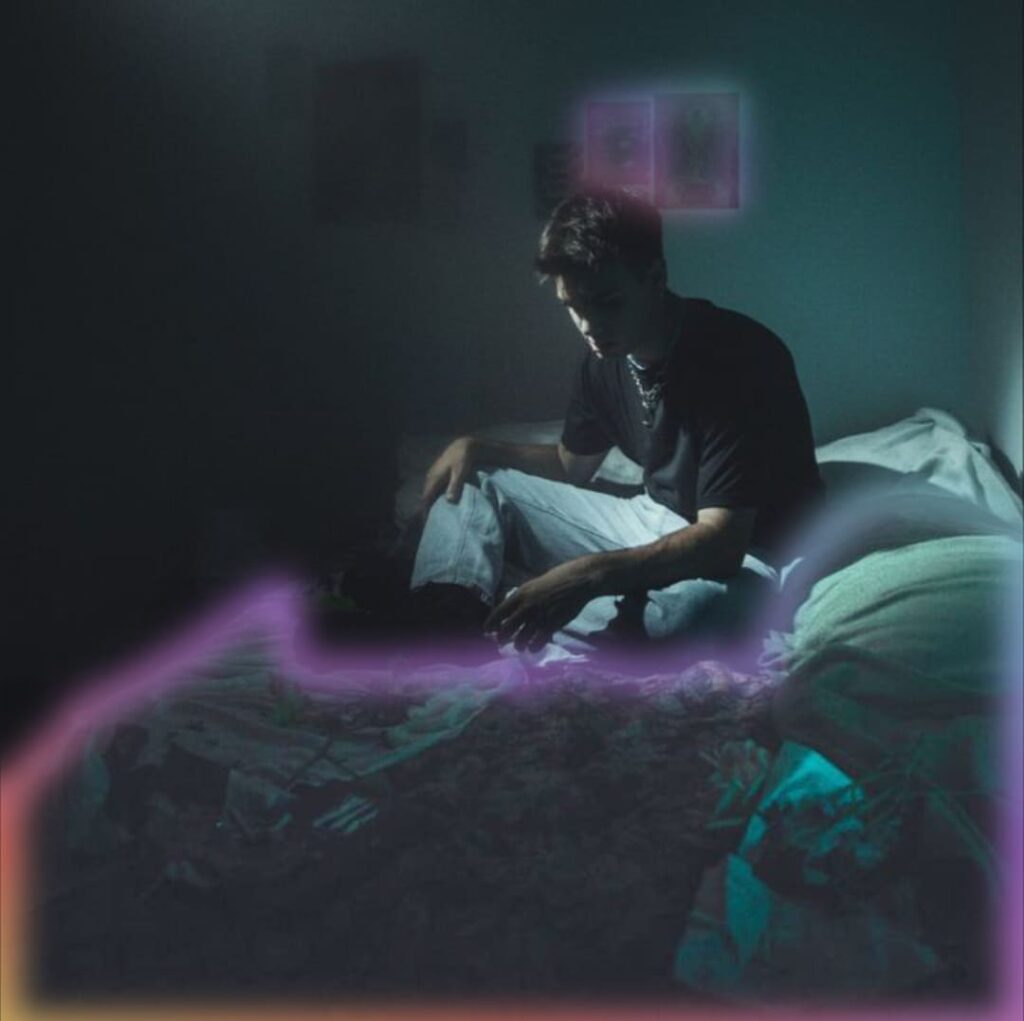
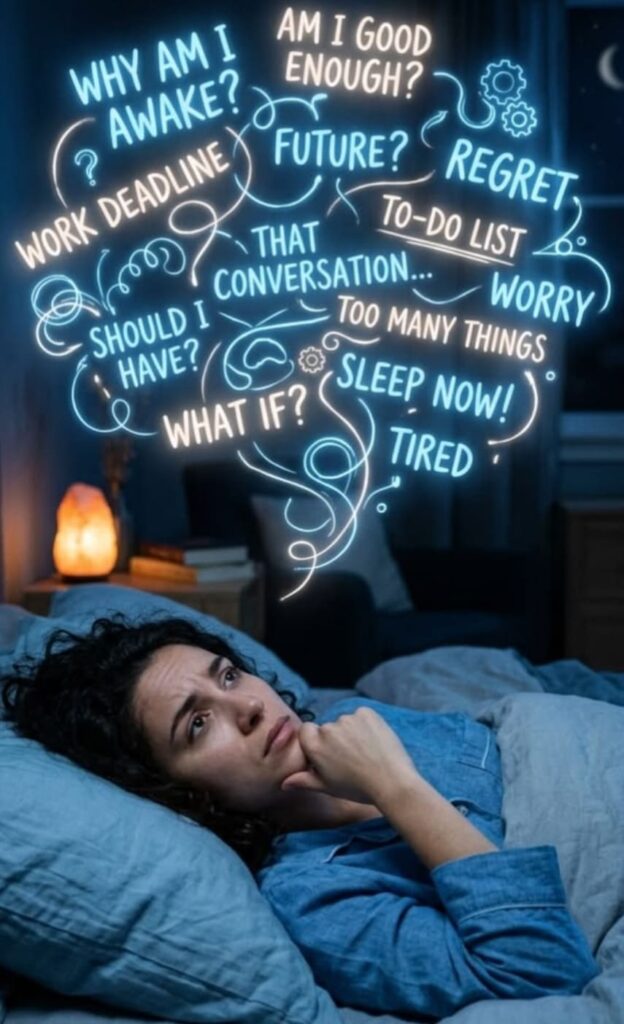
The lights are off. The house is quiet. Then your mind switches on.
Nighttime anxiety is the surge of worry, dread, or physical tension that arrives at bedtime or in the small hours. During the day, work and noise keep your thoughts busy. At night, nothing stands between you and your worries.
Here is the good news. This pattern is well understood, and it responds to treatment. This guide explains why it happens, how to tell it apart from other problems, and what genuinely works. It sits within our wider guide to sleep problems in adults.
⚠️ Medical Disclaimer: This article is for information only. It does not replace advice from your GP or a qualified mental health professional. Never stop or change a medicine without speaking to your prescriber first.
What Is Nighttime Anxiety?
Nighttime anxiety is anxiety that rises or intensifies at bedtime or during the night. It often shows up as racing thoughts, a pounding heart, tension, and dread about not sleeping. It happens because daytime distractions fade, stress hormones stay high, and the bed itself can become a cue for worry. CBT-I, a structured sleep therapy, is the best-supported treatment.
Anxiety is the most common mental health disorder in the United States, according to the Cleveland Clinic. Most people with anxiety also have some form of sleep disruption. In other words, anxiety and poor sleep travel together.
Nighttime Anxiety vs Related Problems
People often mix these up. Each one needs a slightly different approach.
| Problem | What it feels like | Key clue |
|---|---|---|
| Nighttime anxiety | Worry and tension that build at bedtime | Eases when you are busy or in daylight |
| Sleep anxiety | Dread about falling or staying asleep | The fear is about sleep itself |
| Insomnia | Difficulty falling or staying asleep, plus daytime effects | Happens at least three nights a week for months |
| Nocturnal panic attack | Waking suddenly in intense panic | Starts from sleep, not from worry |
They often overlap. A doctor or therapist can help separate them.
Why Anxiety Gets Worse at Night
1. The Distractions Disappear
Daytime tasks absorb your attention. At night, your mind has room to replay problems. Worries feel bigger in the dark and quiet.
2. Your Body Stays on Alert
Anxiety activates the sympathetic nervous system, your fight-or-flight response. Your heart rate and muscle tension rise. Sleep needs the opposite state, which is calm and slow.
Researchers measure this with the Pre-Sleep Arousal Scale. It scores two kinds of arousal at bedtime. Cognitive arousal means racing thoughts, and somatic arousal means body tension.
3. Stress Hormones and Worry Feed Each Other
Researchers propose a two-way loop between the stress hormone cortisol and worry. Higher cortisol may increase racing thoughts. Racing thoughts may in turn raise cortisol. This idea comes from an emerging review, so treat it as a useful model, not settled fact.
4. The Bed Becomes a Worry Cue
Many people with sleep problems learn to link their bed with distress. Clinicians call this conditioned arousal. The Cleveland Clinic notes that people with insomnia often come to see the bed as a place to worry.
5. Trying Harder Makes It Worse
Sleep-focused worry, watching the clock for signs of wakefulness, and trying to force sleep all keep your brain alert. Sleep cannot be forced. The more you chase it, the further it runs.
The Anxiety and Sleep Loop
Nighttime anxiety often becomes a loop:
- You worry at bedtime.
- Your body becomes aroused.
- Sleep is late or broken.
- Tiredness the next day raises anxiety.
- You dread bedtime, and the loop restarts.
The good news is that breaking any link weakens the whole loop. Treatment usually works on several links at once.
Common Triggers of Nighttime Anxiety
- Ongoing stress and worry. Work, money, and relationships are common themes. Our stress management guide can help you lower the load.
- Anticipation. Many people struggle most on Sunday nights, before the working week.
- Health worries. Quiet nights make body sensations feel louder. See our guide to health anxiety.
- Trauma and PTSD. Hypervigilance can switch on at bedtime. Sleep anxiety linked to trauma can be among the harder symptoms to treat, so specialist support matters.
- Caffeine, alcohol, and nicotine. All three disturb sleep and can raise anxiety.
- Screens and late news. Scrolling keeps your mind alert.
- Medical causes. Thyroid problems and sleep apnea can both mimic or worsen night-time anxiety.
Signs of Nighttime Anxiety
In your mind:
- Racing or looping thoughts
- Dread about not sleeping
- Catastrophic predictions about tomorrow
In your body:
- A pounding heart
- Tight muscles or a clenched jaw
- Shallow breathing or sweating
In your behaviour:
- Checking the clock again and again
- Putting off bedtime
- Using your phone in bed
What Actually Works for Nighttime Anxiety
CBT-I: The Best-Supported Treatment
Cognitive behavioural therapy for insomnia (CBT-I) is the first-line treatment for insomnia. It is also the gold standard when anxiety drives sleep problems. The Cleveland Clinic notes that treatment is brief, often four to eight sessions.
The evidence is large. A 2024 component network meta-analysis reviewed 241 randomised trials with 31,452 adults who had chronic insomnia. It found that cognitive restructuring, sleep restriction, and stimulus control were among the elements linked to better outcomes. The 2025 VA/DoD guideline also prioritises behavioural treatment.
CBT-I typically combines:
- Stimulus control: using your bed only for sleep, to break the worry link
- Sleep restriction: matching time in bed to the sleep you actually get
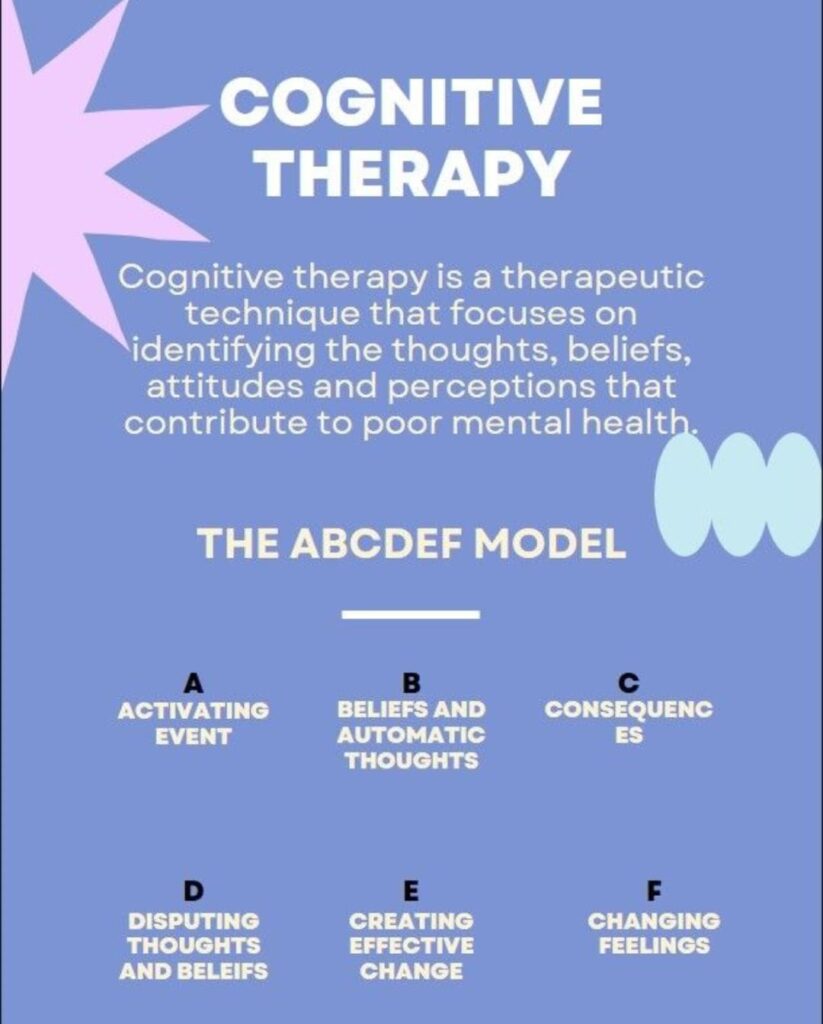
- Cognitive restructuring: challenging catastrophic thoughts about sleep
- Relaxation and mindfulness: calming the body
Ask a clinician before restricting your time in bed. Take extra care if you have bipolar disorder or a seizure disorder, or if you drive for work.
Treating the Anxiety Itself
When anxiety is the main driver, CBT for anxiety helps. Emerging evidence also suggests that brief sleep treatment can improve anxiety and depression symptoms in adults. Our science-backed ways to calm anxiety cover everyday tools.
Paradoxical Intention
Paradoxical intention means gently trying to stay awake instead of forcing sleep. It may reduce the pressure of sleep effort. Findings are promising, but multicomponent CBT-I remains the more firmly recommended treatment.
What About Melatonin and Medication?
Melatonin may help with body-clock problems. However, it does not target the thoughts and arousal at the heart of anxiety. Short-term medicines may have a place in some cases. A doctor should guide this, and CBT-I usually offers longer-lasting benefit.
Digital CBT-I
Digital programmes bring CBT-I to people without waiting lists. Several are described in the help section below.
How the Options Compare
| Approach | Evidence | Best for |
|---|---|---|
| CBT-I | Strongest | Persistent anxiety with poor sleep |
| CBT for anxiety | Strong | Anxiety as the main problem |
| Relaxation and mindfulness | Moderate | Body tension and racing thoughts |
| Paradoxical intention | Promising | Fear of not sleeping |
| Medication | Limited, short term | Specific cases, with a doctor |
Tonight’s Calming Toolkit
These steps support, and do not replace, professional care.
- Write worries down early evening. Note each worry and one next step. A small experiment from Baylor University found that writing a specific to-do list for five minutes before bed helped people fall asleep faster. Our anxiety journaling prompts can guide you.
- Slow your breathing. Breathe in for four counts and out for six. The longer exhale calms your alarm system.
- Relax your muscles. Tense and release each muscle group from your feet upward.
- Hide the clock. Clock-watching feeds sleep effort.
- Use the 20-minute rule. If you are awake and worried, get up. Sit somewhere calm in low light, then return to bed when sleepy.
- Keep a fixed wake time. This steadies your body clock and the cortisol rhythm. Our sleep hygiene guide covers the full routine.
Also cut caffeine by early afternoon and limit alcohol. Both can raise anxiety and fragment sleep.
What to Do at 3am
When anxiety wakes you, follow these steps in order:
- Do not check the time.
- Name it. Say quietly, “This is anxiety. It is uncomfortable, not dangerous.”
- Breathe out longer than you breathe in. Do ten slow breaths.
- Park the thought. Tell yourself, “I will deal with this at 10am.” Jot it down if that helps.
- Get up after about 20 minutes. Do something quiet and dull, then try again.
Rest without sleep still helps your body. Letting go of the pressure often lets sleep return.
When to See a Doctor
Book an appointment with your GP or a mental health professional if:
- Nighttime anxiety happens most nights for several weeks
- You fear going to bed
- You wake in sudden panic
- Daytime anxiety, mood, or concentration is suffering
- You use alcohol or other substances to sleep
- You snore loudly or gasp in your sleep
- A traumatic event started the problem
Anxiety, Sleep and Suicidal Thoughts
Severe anxiety and sleeplessness can feel unbearable. If you are having thoughts of ending your life, please reach out now. You deserve support.
- UK: Samaritans, call 116 123 (free, 24/7)
- USA and Canada: call or text 988
- Australia: Lifeline, call 13 11 14
Nighttime Anxiety: Key Takeaways
- Nighttime anxiety is anxiety that rises at bedtime or during the night
- It builds because distractions fade, arousal stays high, and the bed becomes a worry cue
- Trying harder to sleep usually backfires
- CBT-I is the best-supported treatment, with a large evidence base
- Melatonin does not target the thoughts and arousal behind anxiety
- A worry-time habit, slow breathing, and the 20-minute rule help right away
- See a doctor if it is frequent, if you wake in panic, or if you feel hopeless
A Word From mindnesto
Nighttime anxiety can make the end of every day feel heavy. That experience is real, and it is common.
You are not broken. A well-understood loop is running, and it can be interrupted. With steady habits and the right support, nights can become calmer. 💙
→ Read next: Sleep Problems in Adults: The Complete Guide
→ Also read: Anxiety Journaling Prompts
Frequently Asked Questions
Why is my anxiety worse at night?
Daytime distractions fade, so worries feel louder. Your body also stays in alert mode, with stress hormones and muscle tension keeping you awake. The bed can become a cue for worry.
What is sleep anxiety?
Sleep anxiety is dread about falling or staying asleep. The fear itself keeps your nervous system alert. CBT-I is the main treatment.
How do I stop anxiety at night?
Write worries down early evening and slow your breathing at bedtime. Hide the clock and get up if you are awake after about 20 minutes. If it continues, ask your GP about CBT-I.
Why do I wake up at 3am with anxiety?
Light sleep and stress hormones make early waking common in anxious people. Then worry makes it hard to return to sleep. Avoid clock-watching, breathe slowly, and park the worry until morning.
Does CBT-I help with anxiety and sleep?
Yes. CBT-I is the best-supported treatment for persistent sleep problems, and it often takes four to eight sessions. Emerging evidence suggests it can also ease anxiety and depression symptoms.
Where to Get Help
- UK: NHS: Generalised Anxiety Disorder | NHS Sleepio (digital CBT-I) | NHS Talking Therapies
- USA: ADAA | VA CBT-I Coach App | AASM Sleep Education
- Canada: Anxiety Canada | CAMH
- Australia: This Way Up | Beyond Blue | Sleep Health Foundation
Sources and External References
- Cleveland Clinic: Sleep Anxiety
- Furukawa et al.: Dismantling CBT for Chronic Insomnia, Component Network Meta-Analysis (medRxiv)
- Sleep Onset Anxiety: Mechanisms and Treatment, review (Preprints.org, not yet peer reviewed)
- VA/DoD Clinical Practice Guideline for Insomnia
- ClinicalTrials.gov: Brief CBT-I to Prevent Depression and Anxiety
- ClinicalTrials.gov: CBT-I With Adjuvant Melatonin, Pre-Sleep Arousal Scale
- Psychology by Bogdanova: Sleep Anxiety and the Insomnia Cycle
- Dr Charles Freeman: Sleep Anxiety and Insomnia
- NHS: Generalised Anxiety Disorder
- AASM Sleep Education
- ADAA