





By mindnesto Editorial Team · Updated October 2026 · 9 min read
Some days, deciding what to eat feels harder than actually cooking. You open the refrigerator, check the cupboards, scroll through recipes, and still cannot decide what to make.
This daily decision-making can become frustrating when you are busy, tired, or already managing too many responsibilities.
The solution does not have to be a complicated meal plan. Instead, build a small list of easy go-to meals you can return to whenever you need inspiration.
A reliable meal list reduces repeated decisions, makes grocery shopping easier, and helps you use ingredients you already have. It also gives you flexibility when your schedule changes.
In this guide, you will learn how to build a list of 10 easy go-to meals, organize your ingredients, and create a simple system that works for your household.
What Are Go-To Meals?
Go-to meals are familiar, easy-to-prepare dishes you can make without searching for a new recipe every time.
They usually use accessible ingredients, require manageable preparation, and fit your taste, budget, and schedule.
Examples include:
- Eggs with whole-grain toast and fruit.
- Chicken and vegetable rice.
- Lentil soup with bread.
- A bean and vegetable wrap.
- Pasta with vegetables and a protein source.
Your list does not need to contain expensive ingredients or complicated recipes. It should reflect the foods you enjoy and can realistically prepare.
The goal is not to eat the same thing every day. It is to make everyday food decisions easier.
Why Having 10 Go-To Meals Can Reduce Food Stress
Food decisions involve more than choosing a dish. You may need to consider ingredients, preparation time, family preferences, cost, and what is already available.
Repeating these decisions throughout the week can feel exhausting, especially during demanding periods.
A prepared meal list offers a starting point. Instead of asking, “What should I eat today?” you can ask, “Which of my familiar meals fits today?”
This small change may help you:
- Spend less time deciding what to cook.
- Build grocery lists more quickly.
- Use ingredients across multiple dishes.
- Reduce last-minute food shopping.
- Keep convenient backup meals available.
- Feel less pressure to invent something new every day.
Planning can also support budget-conscious shopping. The USDA’s MyPlate meal-planning guidance recommends checking what you already have, planning meals, and using leftovers.
If food decisions regularly feel overwhelming, read our related guide to food decision fatigue. Confirm that this URL is live before publishing the link.
How to Build a List of 10 Easy Go-To Meals
You do not need ten brand-new recipes. Start with familiar foods, then create a short list you can adjust over time.
Step 1: Choose Meals You Already Know
Think about the meals you make when you have little time or energy.
What can you prepare without checking several instructions? Which dishes does your household usually enjoy? What ingredients do you commonly keep at home?
Write down every realistic idea before judging your list.
For example:
- Eggs and toast.
- Oatmeal with fruit.
- Lentils and rice.
- Chicken wraps.
- Vegetable pasta.
- Bean curry.
- Baked potatoes with beans.
- Vegetable omelette.
- Chicken and rice bowls.
- Vegetable soup with bread.
These are starting points, not strict dietary recommendations. Adjust them for your preferences, allergies, budget, and available ingredients.
Step 2: Include Different Types of Meals
A useful list covers different situations rather than offering ten versions of the same dish.
Consider these categories:
| Meal category | Example |
|---|---|
| Quick breakfast | Oatmeal with fruit |
| Egg-based meal | Vegetable omelette with toast |
| Rice-based meal | Chicken and vegetable rice |
| Lentil-based meal | Lentils with rice or bread |
| Pasta meal | Pasta with vegetables and beans |
| Wrap or sandwich | Chicken or bean wrap |
| Potato-based meal | Baked potato with beans |
| Soup or stew | Lentil and vegetable soup |
| One-pan meal | Chicken or tofu with vegetables |
| Emergency meal | Frozen vegetables, beans, and rice |
You can include breakfast, lunch, and dinner options together. The purpose is to create a practical collection, not a perfect menu.
For general healthy-eating guidance, the NHS guide to a balanced diet explains how different food groups can contribute to a varied diet.
Step 3: Use a Simple Meal Formula
When you cannot think of a recipe, use a basic formula:
Protein source + staple food + fruit or vegetable + flavour.
For example:
- Beans + rice + vegetables + spices.
- Eggs + toast + tomatoes + herbs.
- Chicken + potatoes + vegetables + seasoning.
- Lentils + bread + salad + lemon.
- Tofu + noodles + vegetables + sauce.
This formula is flexible. You do not need every component in every meal, and you can adapt it to your needs and preferences.
A simple formula also helps you reuse ingredients without serving exactly the same dish each time.
Step 4: Choose Meals That Share Ingredients
Buying a separate set of ingredients for every recipe can increase cost and food waste.
Instead, select meals that use some of the same ingredients in different ways.
For example, rice, onions, tomatoes, beans, and frozen vegetables can support several meals. Eggs might work for breakfast one day and a quick dinner another day.
Shared ingredients make your grocery list shorter and can reduce the number of products you need to buy.
The USDA’s healthy eating on a budget resource provides further advice on planning, shopping, and preparing meals within a budget.
Step 5: Give Each Meal a Time and Effort Label
Not every day offers the same amount of time or energy. A meal that feels easy on a weekend may feel demanding after a long working day.
Label your meals using three simple categories:
- Very easy: Minimal preparation, such as eggs on toast.
- Moderate: Some chopping or cooking, such as vegetable pasta.
- Batch-friendly: A dish that can produce additional portions, such as lentil soup.
You can also record approximate preparation times based on your own experience.
Avoid treating these labels as rigid rules. They simply help you match a meal to the time and energy you have available.
Step 6: Add Two Backup Meals
Your list should include at least two options for days when cooking feels difficult.
Backup meals use accessible ingredients and require little preparation.
Examples include:
- Canned beans with rice and frozen vegetables.
- Eggs with toast and a side of fruit.
- A simple soup with bread.
- A sandwich with a suitable protein filling.
- Frozen vegetables added to noodles or pasta.
Choose options that you genuinely enjoy and can store safely.
A backup meal is not a failure or a compromise. It is a practical part of a flexible food routine.
Step 7: Turn Your Meal List Into a Grocery List
Once your ten meals are selected, write down the ingredients you need.
Before shopping, check your refrigerator, freezer, and cupboards. Cross off anything you already have.
Then group the remaining items into categories:
- Vegetables and fruit.
- Protein foods.
- Rice, bread, pasta, and other staples.
- Dairy or suitable alternatives.
- Herbs, spices, and sauces.
- Household essentials.
Keep quantities realistic. If a recipe uses half a bag of vegetables, consider whether the rest can be used in another meal.
You can keep this list on your phone, in a notebook, or on your refrigerator. Add items as you run out rather than rebuilding the entire list every week.
For another practical guide, read how to create a no-stress grocery list, after confirming the page is published and accessible.
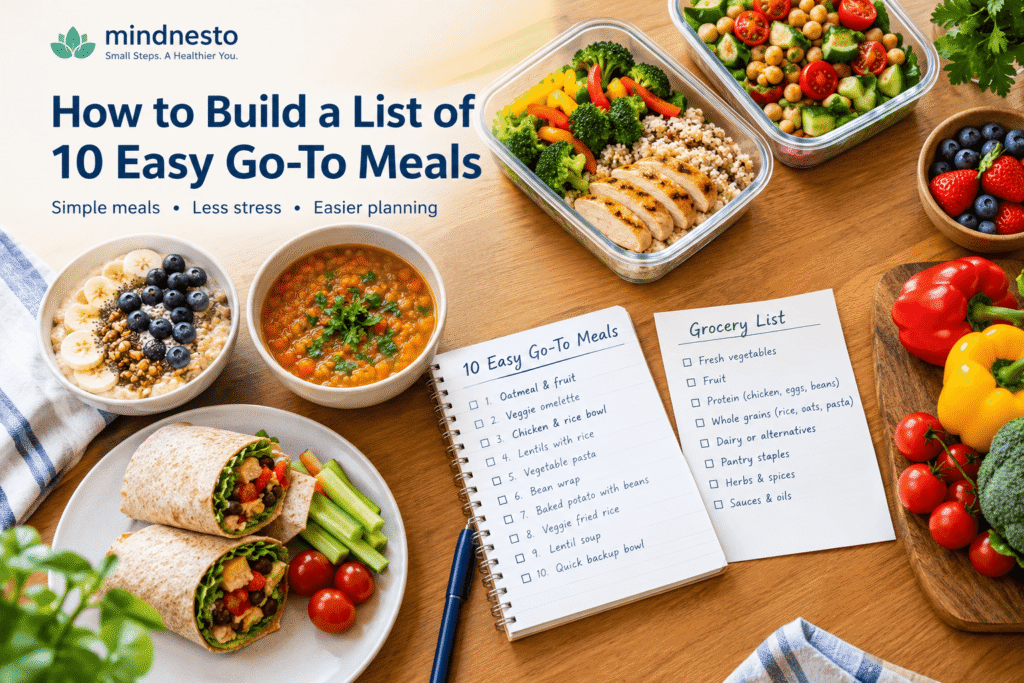
Your Ready-to-Use List of 10 Easy Go-To Meals
Use this example as a starting point. Replace any dish that does not suit your household.
| No. | Go-to meal | Simple ingredients |
|---|---|---|
| 1 | Oatmeal and fruit | Oats, milk or suitable alternative, fruit |
| 2 | Vegetable omelette | Eggs, vegetables, bread |
| 3 | Chicken and rice bowl | Chicken, rice, vegetables |
| 4 | Lentils with rice | Lentils, rice, onions, spices |
| 5 | Vegetable pasta | Pasta, vegetables, tomato sauce |
| 6 | Bean wrap | Beans, wraps, vegetables, sauce |
| 7 | Baked potato with beans | Potato, beans, seasonings |
| 8 | Vegetable and egg fried rice | Rice, egg, vegetables |
| 9 | Lentil and vegetable soup | Lentils, vegetables, stock or seasonings |
| 10 | Quick backup bowl | Rice, canned beans, frozen vegetables |
These are flexible meal ideas, not a prescription. Choose ingredients that fit your dietary needs, cultural preferences, budget, and access to food.
You can make substitutions whenever needed. Frozen vegetables may work instead of fresh ones, and different beans or grains can be used according to availability.
How to Keep Your Go-To Meal List Useful
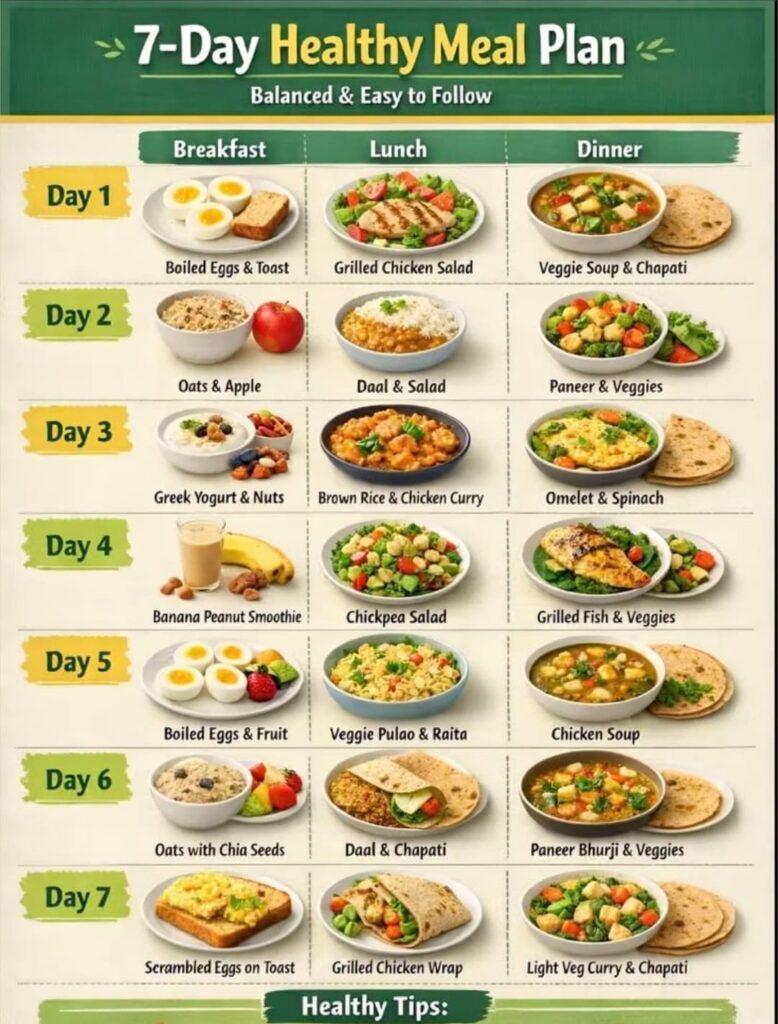
A meal list should reduce pressure, not create another task to manage.
Review it once a week
Choose a convenient time to check your list and the ingredients you already have.
You do not need to plan every meal in detail. Even selecting a few likely options can make the coming week easier.
Repeat meals without guilt
You do not need to prepare a new dish every day. Familiar meals can be part of a varied eating pattern.
Change the seasoning, vegetables, or protein source when you want variety. Keep the basic preparation familiar.
Leave room for unexpected changes
Plans change. You may work late, feel tired, have guests, or discover that an ingredient is unavailable.
Choose another meal from your list rather than treating the original plan as a rule you must follow.
Avoid making the list too ambitious
If a meal requires ingredients you rarely buy or preparation you do not enjoy, it may not belong on your everyday list.
Start with five reliable meals if ten feels overwhelming. Add more as you discover what works.
Use leftovers safely
Leftovers can make future meals easier, but they must be stored and handled correctly. Follow appropriate food-safety guidance for cooling, refrigeration, freezing, and reheating.
The official FoodSafety.gov cold-storage chart provides storage guidance for common foods.
What If You Still Cannot Decide What to Eat?
Pause and make the next decision smaller.
Instead of searching for the perfect meal, ask yourself three questions:
- What ingredients do I already have?
- How much time and energy do I have?
- Which familiar meal fits those limits?
Choose one workable option.
If you are hungry and need food soon, use a simple meal or backup option rather than spending a long time researching recipes.
If you are not physically hungry but feel drawn to food, consider whether stress, boredom, emotions, or another need may be contributing. You can still choose to eat; the purpose of noticing is to understand what would help you, not to judge yourself.
For more guidance, explore what to do when you want to eat but are not physically hungry, once you confirm the URL is live.
If food-related thoughts cause persistent distress or interfere with daily life, consider speaking with a qualified healthcare professional or registered dietitian.
Frequently Asked Questions
How many go-to meals should I have?
Start with five to ten meals you can prepare comfortably. Ten offers variety, but five dependable options can still make planning easier.
What makes a meal easy to prepare?
An easy meal usually uses familiar ingredients, manageable preparation, and equipment you already have. What counts as easy depends on your cooking skills, schedule, budget, and energy.
Can I eat the same meals every week?
You can repeat meals you enjoy. Try to include variety across your overall eating pattern and adapt your choices to your nutritional needs. Repetition should make life easier, not create rigid food rules.
How can I make meal planning cheaper?
Check what you already own, plan meals around overlapping ingredients, compare prices, and consider suitable frozen or shelf-stable foods. Avoid buying large quantities if you may not use them.
What should I cook when I have no energy?
Choose a familiar backup meal that requires little preparation, such as eggs and toast, beans with rice, or soup with bread. Keep suitable ingredients available so you do not have to start from scratch.
Do I need to meal-prep everything in advance?
No. You can simply keep a list of meal ideas and shop for the ingredients you need. Prepare ingredients or portions ahead only when it genuinely makes your routine easier.
The Bottom Line
Building a list of ten easy go-to meals gives you a practical starting point when deciding what to eat feels exhausting.
Choose familiar dishes, reuse ingredients, include backup options, and keep your grocery list simple. Review the system regularly, but allow it to change with your needs.
You do not need a perfect meal plan. You need a flexible set of options that makes everyday eating easier.
Start today: Write down five meals you already know how to prepare. That is the beginning of your go-to meal list.
Editorial note: This article provides general information about meal planning and everyday eating. It is not individualized medical or nutrition advice. If you have specific medical or dietary needs, consult a qualified healthcare professional or registered dietitian.